



Wednesday, Sep 9, 2026
Exclusive insights, data, and analysis for financial market experts.
Request a service
Invest-Time
  • News
  • Topics
    • Mining
    • Project & Performance
    • AfCFTA
    • Sport
    • Startup
    • Telecoms & TIC
    • Tourism
    • Water and Energy
    • Logistics and Transport
    • Agribusiness
    • BTP
    • Business
    • Companies
    • Education & Culture
    • Environment
    • Finance
    • Incentives
    • Industry
    • Infrastructure
  • Media
  • Opinion
  • Focus
  • Institutions
  • Interview
  • Contact
  • Newsletters
  • News
  • Agenda
  • Survey
  • Club Invest For Africa
Reading: Senegal : the pillars of the National Strategy to lift the country out of dependence by 2050
Share
  • English
  • Français
SUBSCRIBE
  • Africa
  • economy
  • Finance
  • cameroon
  • industry
  • mining
  • Energy
  • invest in africa
  • Our Services »
  • Search fund
  • Market research
  • Business Plan
  • Real estate
  • Sales and distribution
  • Survey
  • Club Invest For Africa
Invest-Time
Subscribe
  • Our Services »
  • Search fund
  • Market research
  • Business Plan
  • Real estate
  • Sales and distribution
  • Survey
  • Club Invest For Africa
  • French
  • News
  • Newsletters
  • Survey
  • Services
  • Agenda
What do you find...
  • Agenda
  • Contact
  • Request services in…
  • Newsletters
  • Survey
  • Topics
    • Interview
    • Agribusiness
    • BTP
    • Data watch
    • Energie
    • Environment
    • Finance
    • Focus
    • Tourism
    • Industry
    • The Guest
    • Focus
    • Media
    • Mining
    • Opinion
    • Incentives
    • Infrastructure
    • Analyses
    • Research and Development
    • Sport
    • Education & Culture
    • Tourism
    • Business
    • Companies
    • Startup
    • Institutions
    • Project & Performance
    • Society
    • Telecommunications & TIC
  • Africa
    • Southern Africa
    • Central Africa
    • East Africa
    • West Africa
    • North Africa
  • More
    • Regional Integration
    • AfCFTA
Already have an account ? Sign In
Follow US
© 2023 Invest-Time. By Afrik-Shine Medias Group. All rights reserved.
Project & Performance

Senegal : the pillars of the National Strategy to lift the country out of dependence by 2050

"Sénégal 2050 : agenda national de transformation" aims to chart a new course for the country's economic and social development up to 2050. The document, considered to be the new benchmark for public policy, was unveiled.

By
Aissatou Amirah
Published: 22 October 2024
Last updated: 22 October 2024
7 Min Read
Share
Senegal : the pillars of the National Strategy to lift the country out of dependence by 2050

Follow us on our channel  chaîne Telegram Invest-Time   chaîne WhatsApp Invest-Time chaîne TikTok Invest-Time

This plan, which replaces former President Macky Sall’s Plan Sénégal émergent (PSE), aims to profoundly transform the country, with a focus on four major axes : competitive economy and job creation, governance and pan-African commitment, sustainable regional planning and development, and human capital and social justice. These axes form the basis of a change that the Head of Government describes as a “qualitative and profound break” to lift Senegal out of dependence and underdevelopment.

Competitive economy and job creation : recovery through industrialization

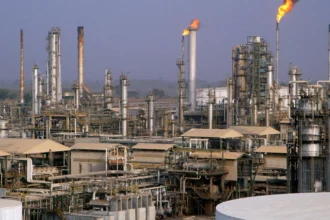
The first priority is to build a diversified, resilient economy. The government aims to support the creation of quality jobs through a strong national private sector. Emphasis will be placed on industrialization, agricultural transformation and technological innovation. This new strategy aims to provide the country with solid growth engines that will change the face of the Senegalese economy. According to Victor Ndiaye, President of Performance, which contributed its expertise to the drafting of the document, the first priority is extractive industries, including natural gas and phosphates. These resources, hitherto exported, will now be used to industrialize the country through increased energy production and local processing.

Current electricity production, at 1,740 megawatts, is set to rise to 12,000 megawatts by 2050, with a sharp reduction in tariffs and an easing of subsidies by 2029, based on the exploitation of offshore natural gas on the Mauritanian border, scheduled to start up at the end of 2024. “Vision Sénégal 2050” also focuses on agriculture through a policy of self-sufficiency and product processing, on manufacturing via a reindustrialization strategy, and on value-added services. In the latter sector, the digital, tourism and cultural and creative industries will be at the heart of development policies, according to the authorities.

With this ambitious plan, the Prime Minister hopes to establish a new trajectory for Senegal, breaking with previous approaches often criticized for their lack of long-term vision. “Senegal 2050” is a bold project that will put the country back on a firmer footing, while placing sustainability, inclusiveness and transparency at the heart of its development.

Governance and pan-African commitment : towards a model Senegal in Africa

Fighting corruption and reforming institutions are top priorities According to media outlet Walf Net, Prime Minister Ousmane Sonko’s ambition is to make Senegal a model of transparency and the rule of law on the continent, with a strong commitment to attracting investment in key sectors such as agriculture, promoting investment in sustainable farming to improve food security and create jobs. Energy, developing renewable energies, particularly solar and wind power, to diversify energy sources and secure the country’s energy supply. Information and communication technologies (ICT) : encourage the development of digital infrastructures and technology startups to modernize the economy, and invest in road, port and airport infrastructures to facilitate trade and improve connectivity.

Planning and sustainable development : a better-structured Senegal

Better territorial and environmental management. According to the document “Sénégal 2050 : agenda national de transformation“, the government plans to structure Senegal around eight regional hubs in order to better distribute resources and infrastructure. Infrastructure development will respect the country’s natural resources, with particular emphasis on protecting ecosystems, according to information relayed by the Reussir Business media. The last axis is based on investment in education, health and vocational training. The aim is to create a society where all citizens have the means to participate actively in the country’s economic development. Ousmane Sonko insists on the need to reinforce social justice by guaranteeing equitable access to essential public services, particularly in the health and education sectors.

Target 4500 USD per capita

With this strategy, “the fruit of local expertise“, the new authorities aim to turn Senegal into an upper-middle-income country by tripling gross national income per capita. National wealth per capita, estimated at around 1,660 USD (998,110 CFA francs) in 2023, should rise to over 4,500 USD (2.7 million CFA francs) in a quarter of a century, thanks in particular to forecast annual growth of at least 6.5%, according to Victor Ndiaye, President of Performances, which contributed its expertise to the drafting of the document.

To achieve these results, Senegal intends to build an “endogenous” economy via a new development financing paradigm and the definition of “eight dynamic territorial clusters” spread across the country. The aim is to move the country away from an “unbalanced” development model and the “macrocephaly” that has seen the Dakar region alone account for 46% of GDP, despite representing just 0.3% of the country’s territory.  The “Senegal 2050” strategy aims to correct this by reducing the weight of the capital to 29% of GDP, compared with the eastern regions, the most poverty-stricken, which should account for 20% of national wealth over the next 25 years.

The promise of “controlled” inflation

The government is counting on annual growth of between 6.5% and 7% over the period 2025-2029. It intends to reduce the state debt from 83.7% of GDP in 2023 to 70%, and the budget deficit to 3% “within a reasonable timeframe“, detailed statistical engineer and economist Souleymane Diallo according to the SenePlus media. Diallo also asserted the need to increase tax revenues by broadening the tax base without raising taxes, as well as the need to control current expenditure and better target energy subsidies, which he said represent 4% of GDP, “without impacting electricity tariffs“. Inflation “will be kept under control at around 2% for the next five years“, he assured. Despite its natural riches such as oil and gas, Senegal, which is set to enjoy some of the strongest growth in West Africa, remains the 169ᵉ country out of 192 on the UN Human Development Index. In five years, it should move from low to medium human development countries, according to Souleymane Diallo.


Find out more

CONTACT US NOW
TAGGED:AfricaeconomyFinance

Don't miss any opportunities

Receive all the latest opportunities directly in your inbox.

Please check your inbox or spam folder to confirm your subscription.

Share
Previous Article Michael Ahonzo Avou : the face of African finance at the helm of JP Morgan Chase in Ivory Coast Michael Ahonzo Avou : the face of African finance at the helm of JP Morgan Chase in Ivory Coast
Next Article Cameroon : Pristine, the new mineral water and soft drinks production and distribution company, pioneers for the re-industrialization of the south west region
- Advertisement -
Popular this month
JUST ENERGY TRANSITION IN SENEGAL
Just energy transition in Senegal : less than 650 billion mobilized out of a 1,640 billion FCFA target
Senegal: Super gasoline now 990 FCFA, diesel 755 FCFA as new prices take effect today
Senegal: fuel prices increased again, after a drop last december
Onions in Senegal: import freeze officially lifted
Marcelle Monkam Siayojie, the Cameroonian at the Helm of Jumia Morocco
Who is Marcelle Monkam Siayojie: the Cameroonian executive who is Jumia Morocco’s new CEO
Rebar: VAT on Local Products Is Six Times Higher in Senegal Than in Gabon
Rebar: VAT on local products is six times higher in Senegal than in Gabon
Senegal Targets 487 Billion FCFA on UEMOA Securities Market in Q3 2026
Dakar aims to mobilize 487 Billion FCFA in two months on the UEMOA securities market
hejun tour

Recommended

Kenya’s Tea Paradox: From World’s Top Exporter to Undervalued Commodity
Agribusiness

Kenya: The paradox of being the world’s top tea exporter but earning less

This discrepancy highlights a critical issue: Kenya’s tea is significantly undervalued on the global market, fetching just $2,252 per tonne,…

4 Min Read
Zambia : Canada's Ivanhoe Mines begins copper exploration
Mining

Zambia : Canada’s Ivanhoe Mines begins copper exploration

Zambia has taken another step into mining. The country has signed a copper mining agreement with Ivanhoe Mines.  This partnership…

2 Min Read
Money laundering : how Senegal restored its image for the investment community
Finance

Senegal launches 2026 public debt offering of 200 billion CFA francs

Financing the 2026 budget and structural reforms . The funds raised through this operation, arranged by investment management and brokerage…

2 Min Read
Cameroon : JMJ Participation and JFN Group sign a partnership for an incubator to develop internationally competitive start-ups
Startup

Entrepreneurship : JMJ Participation and JFN Group sign a partnership for an incubator to develop internationally competitive start-ups

JMJ Participation and JFN Group signed a strategic agreement on November 26, 2024. The aim is to set up an…

4 Min Read
invest-time
Central Africa
  • Cameroon
  • Central African Republic
  • Gabon
  • Equatorial Guinea
  • Democratic Republic of Congo
  • Republic of Congo
  • Sao Tome-et-Principe
  • Chad
West Africa
  • Benin
  • Burkina Faso
  • Cape-Verde
  • Ivory Coast
  • Gambia
  • Ghana
  • Guinea
  • Guinea-Bissau
  • Liberia
  • Mali
  • Niger
  • Nigeria
  • Senegal
  • Sierra Leone
  • Togo
East Africa
  • Burundi
  • Djibouti
  • Eritrea
  • Ethiopia
  • Kenya
  • Ouganda
  • Rwanda
  • Somalia
  • Sudan
  • South Sudan
  • Tanzania
Southern Africa
  • South Africa
  • Angola
  • Botswana
  • Comoros
  • Eswatini
  • Lesotho
  • Madagascar
  • Malawi
  • Maurice
  • Mozambique
  • Namibia
  • Seychelles
  • Zambia
  • Zimbabwe
North Africa
  • Algeria
  • Egypt
  • Libya
  • Morocco
  • Mauritania
  • Middle East
  • Tunisia
Useful links
  • News
  • Contact us
  • Newsletter
  • Monitoring
  • Services
  • Commodities
Others web site of the Group
  • Afrik Shine TV
  • Album Social
  • Sports Team
  • AFrik Shine Medias Group
  • About us
  • Archives
  • Partnership
  • Club Invest For Africa
  • Privacy policy
  • Legal information
  • Cookie Policy
  • Privacy Statement

© 2023 Invest-Time. All rights reserved. By Afrik-Shine Medias Group.

logo invest time logo invest time
Welcome !

Log in

Username or Email Address
Password

Lost your password?

Not a member? Sign Up