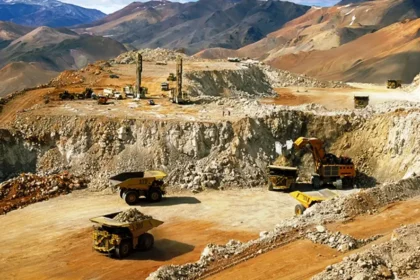




At the Macfruit 2018 showcase (an international trade fair specializing in fruit and vegetables) held in Accra Ghana, tropical pineapple producer and exporter Sam Valley Farm presented its achievements to the general public. It is a tropical pineapple producer and exporter located in the Awutu Senya district, in the Central Region of Ghana, West Africa. The company currently serves the EU and Middle East markets with the MD2 pineapple variety.
The company is part of the Trasacco Group (owned by the Italian Taricone family). It occupies 800 hectares, including 300 hectares for pineapple cultivation. Per hectare, 65,000 pineapple plants are planted, for an average annual production of 90,000 tons. The long-term goal is to produce 110,000 tonnes per hectare in this production the fruit weighs an average of 1.7 kg, but its size can vary from 1 to 2.5 kg.
Produce that is not suitable for export – around 20 tonnes a week – is sent to a processing plant to be made into juice. The average price of a 12 kg box is 5.80 USD at the port of Accra. Every week, the company handles 5 to 10 reefer containers and makes numerous air shipments. Depending on the time of year and availability, reefer containers cost between 2,500 and 4,000 USD each.
Pineapple accounts for 0.6% of Ivorian GDP
Although pineapple originated in South America it was introduced to Ivory-Coast in the 1930 during colonization thanks to trade. Belonging to the Bromeliaceae family the pineapple today comprises 1,900 species 45 genera and 5 varieties including the “Cayenne lisse” grown mainly in Ivory-Coast .In a bid to diversify agricultural exports, the Ivorian government boosted pineapple cultivation through various aid schemes in the 1970 (supervision, applied research, financing of state structures).
Production averages 170,000 tonnes a year, and the country has a 39% share of the European Union market. The sector is characterized by a wide diversity of operators at all levels: there are some 2,500 small pineapple growers, who produce 80% of the crop informally or traditionally. Most of them are affiliated to cooperatives for the grouping, packaging and transport of their production for export.The average size of their farms is 5ha. At the other end of the scale are industrial farms belonging to major fruit distribution groups around the world. This is the case of SCB (Banana Cultivation Society) part of the international DOLE group, which produces fruit intensively for export with farms averaging 500 ha.
The main pineapple-growing areas are to the east of the Comoé River, with the towns of Grand-Bassam, Bonoua, Adiaké and Aboisso accounting for 80% of production, according to the agriculture.gouv.ci website. Other production zones include Dabou, Tiassalé and Agboville. In Côte d’Ivoire, pineapple represents around 0.6% of national GDP and 1.6% of agricultural GDP.
Benin’s “Bread of sugar” pineapple earns its label of excellence from OAPI
It’s the first step towards raising the profile of the country’s fruit and agriculture. By obtaining its first PGI (Protected Geographical Indication) for “Bread of sugar” pineapple, Benin has secured international visibility for one of its main agricultural products. In the longer term the whole of national agriculture could benefit from this process. “Sugarloaf pineapple from the Allada plateau Benin. It was under this exact name that the first Protected Geographical Indication (PGI) ever obtained by Benin was registered, on October 28, 2020, at the Benin Chamber of Commerce and Industry.
This PGI is issued by the African Intellectual Property Organization (OAPI) which has 17 African member states it highlights products whose quality is linked to a specific terroir (soil quality, climate, etc.) techniques or know-how. In short, it is a major asset in international trade. It is the result of several years’ collaboration between OAPI and the project to support the strengthening of private sector actors financed by the AFD and the European Union. Pineapple is one of the promising agricultural sectors particularly supported by the Government Action Program (PAG), implemented by President Patrice Talon over the past five years along with cotton, rice, cashew nuts and shea. Its aim is to boost the creation of agricultural and industrial clusters and turn the agricultural sector which employs around 70% of the working population into a lever for economic development.
As a result of this policy total pineapple production in Benin reached 350,345 tonnes in 2019 some 100,000 tonnes more than in 2016. The public authorities and their partners have also stepped up efforts to improve the pineapple sector, from production to processing and distribution, enabling it to conquer the domestic market before being exported to Nigeria, Burkina Faso, Niger, Mali and as far afield as Morocco. The “Bread of sugar” PGI will be a further argument for consolidating these market shares and winning new ones particularly in Europe. Gaston Dossouhoui, Minister of Agriculture, Livestock and Fisheries who is also Chairman of the National Committee for Geographical Indications was delighted to receive the PGI. However, he pointed out that
“it should not be seen as an end in itself, but rather as a step that must be followed by ongoing work to ensure compliance with the established specifications. I would like to count on the participation of economic operators to develop real clusters, so as to carry the pineapple torch high“.
A plan to produce 88,782 tons of pineapples in Togo by 2028
Togo has managed to occupy the position of second largest African exporter of organic produce to European Union countries behind Egypt, rising from 22,000 tonnes to almost 45,000 tonnes an increase of 102% recorded. Indeed, the country had more than doubled its organic exports to Europe between 2018 and 2019. This figure made Togo the world’s 14th largest exporter (up from 31st place in 2018).
Most recently, Togo validated an investment plan for the pineapple sector with the aim of boosting its growth and sustainability from 2024 to 2028. This document called the Pineapple Sector Investment Action Plan 2024-2028, dated May 2023, brings together the priority actions to be carried out for a total investment of 16 million USD (9.5 billion FCFA) over five years, reports the Togolese news site Togo first. The main aim of the plan is to double pineapple production from 44,391 tonnes to 88,782 tonnes by 2028 it also aims to increase local processing, raising the percentage of pineapple processed from 35% to at least 75% by 2028.
Funding for this plan is expected to come from the Togolese government, the Interprofessional council of the pineapple sector in Togo technical and financial partners. In detail the implementation of this investment plan will focus on three major strategic axes firstly, the promotion of sustainable production methods that guarantee better incomes, secondly promoting better market access for Togolese producers and finally, improving the institutional framework and governance of the pineapple industry.
“The pineapple value chain is still underdeveloped, but it offers interesting prospects for Togo’s agricultural economy, provided that the stakeholders mobilize to strengthen it“, say the Ministry of Agriculture and the stakeholders in this plan.
In developing this sector Togolese pineapple should be able to capitalize on advantages such as its aroma and taste, compared with its competitors. What’s more the country has the capacity to expand pineapple cultivation and occupies a prime position in the organic produce market, which is in strong demand. This value chain has enough assets to be part of the agro-industrial and agropole dynamic promoted by the national authorities and their partners. Furthermore, according to GIZ data national organic production currently represents 76% compared with 24% for conventional production. Yields vary from 40 to 50 tonnes per hectare, for a national pineapple production of 44,391 tonnes. Togo a West African country, is ECOWAS’s biggest exporter of organic produce to the EU. With the organic pineapple sector, Togo is experiencing exponential growth. Between 2017 and 2019, pineapple production in the country rose by 11.6%from 27,000 to 30,149 tonnes. Togolese pineapple is highly prized in Europe and North America, with 60% of production exported to Europe and the sub-region.
Indeed, “the sector has extraordinary potential for the Togolese economy“, said Alex Adabra head of CIFAN at the beginning of July if the sector is promising today, it’s thanks to the determination of producers, coupled with government funding and support from the Support fund for youth economic initiatives. Today the activity generates nearly 10 million USD (6 billion FCFA) a year and employs nearly 6,000 people. Some thirty companies in the region produce over a million liters of pineapple juice, including 200,000 liters for the organic market. However, demand outstrips producers’ capacity.
“Delice Juice” produces organic pineapple juice from Togo
Pineapple processing is expanding in Togo. The case in point is the “Delice Juice” factory set up in Gbatope, 47 km north of Lome. Construction of this plant began in November 2018 and it was inaugurated at the end of April 2019. Developed with an investment of around 3 million USD (1.7 billion CFA francs) from the Moringa fund, with support from the European Union and German cooperation, Delice Juice is a state-of-the-art plant that produces “organic” pineapple juice. Director Augustin Nanfan, explains the transformation process.
“Once the fruit has been washed, it falls into a hopper fitted with a lateral knife that splits it in two, 2 peeling machines scrape the inside of the fruit, the scraped pulp falls into an extractor-beater tank for crushing, and the peelings fall into an endless screw, to be sent to the composting platform.
The compost is then distributed to growers. According to Gustav Bakoundah, General Manager of the industrial unit, his company is a model of social profitability.”Delice juice” is all about promoting organic farming with small producers who are trained, grouped, certified and affiliated with the factory. Delice juice means social and environmental responsibility, a win-win partnership with our first partners: the producers.The plant’s production is entirely destined for export in drums weighing 250 kg each the aim is to export 4 to 5 containers per shipment explains Augustin Nanfan, in the room where filled drums are already stored.
“Here, we have drums of finished products that are already ready. On each wooden pallet, there are 4 drums. In a 20-foot container, we’ll have 80 drums to send.
The plant currently employs around twenty people as it still only operates 8 hours a day eventually, there will be 60 employees on site. The Delice juice production line has a processing capacity of 1,500 kg of fruit per hour, to produce the equivalent of 1,000 liters of juice. It can operate 24 hours a day. However, it has not yet reached cruising speed. Small-scale producers of pineapple juice and derivatives in vogue in Cameroon
In Cameroon, the Club Afrique Agropme project aims to transform pineapples into 100% organic juice.
“We started from the observation that at most of the ceremonies organized in our towns, many people often have a certain reluctance towards industrial soft drinks containing artificial products which are the drinks that are always available,
say the beneficiaries of this project, on the pineapple production side.
“Our main vision is to popularize the consumption of natural fruit juices in our sub-region and internationally“, they explain.
In addition there are a multitude of SMEs in the country that transform pineapple into finished products or semi-finished products, such as dried pineapple, pineapple jam, etc.
Climate change leads to lower pineapple production
For the FAO the drop in rainfall has had an impact on pineapple-growing areas in Ivory-Coast. In 2023 Sodexam, in charge of weather forecasts, noted a 7% drop in rainfall compared with the average for the last 30 years and the outlook for 2024 looks similar: “Droughts will impact water availability in hydroelectric dams”, warns Sodexam but the drop in production also seems structural. “There are financing problems and difficulties in accessing certified seeds,” explains Drissa Traoré, an expert at the Ministry of Agriculture.
Added to this is the rise in input prices the price of a bag of fertilizer rose sharply in 2022 it now costs around 25,000 FCFA… For lack of means, growers are maintaining their plantations less well and some are reducing the number of sprays.
“The plantations didn’t produce good yields because they weren’t well fed,” says Ousseini Ouédraogo head of a cooperative in South-Comoé. Finally growers face difficulties in acquiring land they cultivate on smaller and smaller plots of land they rent land for a cycle of 12 to 14 months, with no guarantee for the following season because according to some growers prices have risen: before, growers could pay 70,000 CFA francs/ha for one year. Since 2022, they have had to pay 325.70 USD (200,000 CFA francs)/ha for a 12-month cycle. The consequence of these less attractive conditions is a drop in sales. To turn things around, some growers are betting on patience and the development of organic farming.