




Olivier Buyoya, IFC’s Regional Director for West Africa, offers a candid assessment of the region’s industrial trajectory in an exclusive interview with Agence Ecofin. He explores the barriers impeding progress and outlines actionable strategies for investors seeking to engage with this dynamic but complex market. West Africa boasts compelling fundamentals for industrial development. The region is endowed with abundant natural resources, a rapidly expanding population, and an increasingly urban consumer base. Demand for processed goods, particularly in agro-industry and consumer manufacturing, continues to rise.
Buyoya emphasizes that despite political and economic instability in certain states, there is consistent progress in sectors such as food processing and digital innovation. However, systemic constraints continue to undermine industrial scalability. The lack of deep economic integration between countries, inefficient infrastructure, and unreliable energy supplies hinder intra-regional trade and discourage long term industrial investments. Another significant challenge lies in workforce readiness. While labor remains relatively inexpensive, it is often unskilled, reducing its competitiveness. According to Buyoya, affordability alone is not sufficient. Industrial growth requires a labor force equipped with technical and managerial capabilities aligned with modern industry standards.
Sectoral priorities with strategic appeal
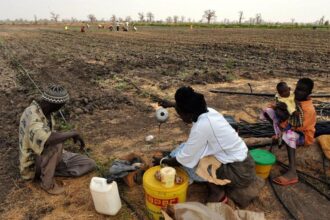
Despite these headwinds, several industrial sectors offer real promise. Mining is one of the most compelling. Countries like Mauritania, Guinea, and Senegal are rich in iron, bauxite, and phosphate, yet most of these commodities are exported raw. A local processing shift would dramatically increase value retention. The textile industry is another opportunity. West Africa produces millions of tonnes of cotton annually, yet most of it is shipped to Asia for transformation, only to return as finished garments. For Buyoya, this outsourcing of value creation is unsustainable. Developing a domestic textile chain could energize rural economies and support job creation. Agro-industry also holds immense potential. The region is already a significant producer of export commodities such as cocoa and cashew nuts. With increasing urban demand, there is also space for domestic processing of staples like maize and cassava. Structuring industrial value chains around these sectors could drive regional self-sufficiency and enhance export competitiveness.
How the IFC is shaping industrial growth
IFC, the private sector arm of the World Bank Group, is actively involved in creating an enabling environment for industrial investors. Buyoya explains that the organization’s strategy is multilayered. It begins with advising governments on macroeconomic stability, trade reforms, and the creation of industrial incentives such as tax breaks and special economic zones. Equally important is investor mobilization. IFC collaborates with domestic and international champions like Dangote and SIFCA, not just through direct financing, but also by assisting in project development. This includes conducting feasibility studies, mitigating environmental and social risks, and helping to structure robust public-private partnerships. Beyond large corporations, IFC supports SMEs and mid-sized businesses, particularly those that form part of larger value chains. Financing is deployed through commercial banks, development funds, and increasingly, through FinTech platforms designed to improve SME liquidity and shorten cash flow cycles.
More Read

Overcoming core structural barriers
The availability of reliable and affordable energy remains one of the greatest challenges to industrial expansion. However, progress is being made. In Ivory Coast, over half the national electricity supply is now produced by private operators, many of them supported by IFC. Senegal is following a similar model, with the private sector playing a growing role in energy generation. These models show that it is possible to lower energy costs and improve reliability through competition and strategic investment. While production still lags behind rising demand, Buyoya sees momentum building as governments open the door to public-private collaboration.
Transport infrastructure is another area where reform is essential. Currently, it costs more to ship a container from Abidjan to Marseille than from much further Asian ports. This cost imbalance erodes regional competitiveness and deters manufacturing investment. IFC is helping address this by co-investing in port and airport modernization projects across West Africa, including in Togo and Cape Verde, in partnership with global logistics players. On the financing side, Buyoya argues that a holistic view of value chains is required. While IFC supports large-scale industrial ventures, it also recognizes that a successful industrial ecosystem depends on the health of the smaller businesses within the chain. Whether through banks, microfinance institutions, or investment funds, IFC aims to close financing gaps across the spectrum.
Building true local value chains
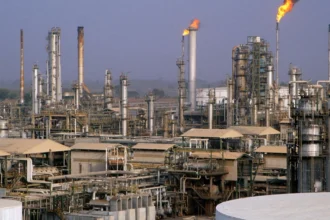
Buyoya cautions against an overreliance on basic assembly industries, which often add limited value. While such operations can be a starting point as seen in countries like India and South Korea moving beyond assembly requires intentional investment in local suppliers, better logistics, and technology transfer. Guinea’s bauxite industry offers a case in point. The country is among the world’s top producers, yet almost none of it is refined into alumina or aluminum locally. Establishing a local processing industry would require massive energy inputs at highly competitive rates, as well as stable regulation and logistics.
With over 400 million consumers, ECOWAS alone offers a large and growing demand base for industrial goods. As middle classes expand and cities grow, the opportunity for regionally integrated value chains becomes more tangible and attractive.
Navigating fragility and political risk
While investor appetite is understandably higher in more stable markets like Ivory Coast and Senegal, Buyoya underlines the resilience of private entrepreneurs in more fragile states such as Mali, Burkina Faso, and Niger. Despite insecurity and infrastructural gaps, many local businesses continue to grow, particularly in agro-processing and mining services. IFC continues to support these entrepreneurs with a tailored approach, combining financing with technical assistance. Infrastructure projects like the rehabilitation of the Dakar-Bamako railway could provide game changing logistical support to landlocked economies.
Shifting global dynamics and new investment models
With development aid from traditional donors beginning to decline, Africa must explore new financing models. Buyoya notes that the U.S. and Europe are scaling back development assistance in favor of climate or security spending. This shift necessitates a pivot toward private capital markets and blended finance. For IFC, the impact is limited thanks to its access to capital markets and its strong credit rating. But Buyoya sees this as a moment of reckoning for African economies. The effective implementation of the African Continental Free Trade Area (AfCFTA) could help unlock new intra-African opportunities and reduce dependence on volatile external markets.
New technologies are transforming industrial capacity at every level. In agriculture, AgriTech platforms are helping smallholder farmers improve productivity and quality, ensuring consistent supplies for processors. In finance, FinTech startups are streamlining payments and reducing delays in supply chain transactions, thereby enhancing liquidity across the board. These innovations function as catalysts that make traditional sectors more competitive. They bridge structural gaps that would otherwise require years of infrastructure development to overcome.