

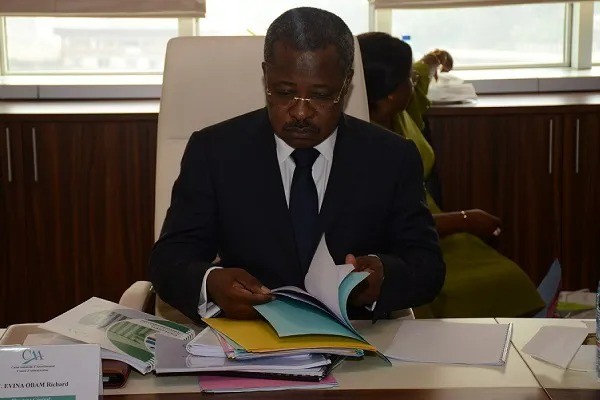



In Cameroon, the Deposit Consignments Fund(CDEC) is being held back in its drive to mobilize part of the resources allocated to it. This is due to a recent decision by the Banking Commission of Central Africa (Cobac) requiring credit, microfinance and financial institutions in Cameroon to suspend transfers to CDEC of dormant assets in their portfolios.
Cobac believes that these transfers require prior clarification of the nature of these assets and, above all, the establishment of a regulatory framework at Community level governing the methods of conservation, management and restitution of these assets.
“Strong collusion and connivance between the Banking Commission of Central Africa and the recalcitrant banks, screams an Invest-Time source at the CDEC. I would say that this is a vicious instrumentalization of the Cobac by a few banks wishing to continue to unduly enjoy a resource that should be transferred to the Caisse des dépôts et consignations by law.
The same source maintains that, in reality, the banks are resisting:
but beyond the insidious use of the banking industry watchdog’s cover, the mischief goes beyond the perimeter of ethics.
Public deposit and consignment services and state sovereignty
According to Invest-Time’s information, obtained from sources close to CDEC, the public deposit and consignment service comes under the sole sovereignty of the States and has never been one of the matters transferred to the Community, so that Cobac has come to want to regulate it. Cobac will only be able to take an interest in CDEC when the latter starts carrying out banking operations, our sources tell us.
At Cdec, it is believed that the institution is currently in the process of mobilizing the resources allocated to it, and that certain parties must not hinder this process by exploiting Cobac:
“Why is it that Cobac is involved now? Cdec was created in 2008, and the decree governing the transfer was signed in December 2023. It’s at a time when many banks have come forward that recalcitrant banks are turning to Cobac to get it to step outside its regulatory remit. It’s a vicious circle,
insists an Invest-Time source. Community construction cannot be achieved harmoniously by such actions,” claims our source, before concluding:
“Funds that have already been transferred will remain where they are because they have been transferred by law. It is not Cobac’s role to hinder national processes that are duly governed by law. On the pretext that we are preparing a community regulation,
insists our source. Cobac’s decision regarding dormant assets in Cameroon’s financial establishments has prompted a variety of reactions and questions. Daniel Claude Abate is one of them:
“This decision comes at a time when the process of transferring these assets has already began, and certain financial organizations, including the national BEAC (Bank Of Central African States), have already signed agreements or conventions for the transfer of assets in their possession. How is this timing to be understood, and what of the assets already effectively transferred to the CDEC (will it keep them or return them to the financial institutions that carried out the transfers?)asks the executive chairman of Mecam, in a reaction published on Thursday July 11, on his social media accounts.
Value transfers and financial stability in the Cemac
He qualifies this by admitting that these assets transferred to CDEC need to be regulated and properly supervised, to ensure that the latter does not manage the money it receives like most public enterprises, or that the central government itself is not tempted to siphon off CDEC’s reserves to finance its lifestyle. Similarly, he adds that the SG of Cobac is right to draw the attention of stakeholders to the risks posed by these transfers of value to the financial stability of the Cemac if they are not properly supervised.
“It’s a reminder that seems to me to be extremely important, and one that all players should have or bear in mind in this matter”, he notes.
However, Mecam’s Executive Chairman recalls that the risk to financial stability was one of the banks’ strong arguments at the very start of this affair, in an attempt to slow down or even prevent the transfer of these assets after the CDEC was set up.
“This raises the question of whether the banks are more concerned with their own survival than with preserving the region’s financial stability. Indeed, everything suggests that our banks are concerned with safeguarding these assets in their portfolios, in order to continue to “run” with them and strengthen their own balance sheets,
notes Daniel Claude Abate.
For him, in an environment where banks are reluctant to play their traditional role in financing the real economy, “and our SMEs in particular“, he stresses,
“For them, these assets represent a genuine long-term savings vehicle, cheaper and free of charge – what can I say, a “windfall” – which they have been clinging to and growing for so many years to their sole benefit and profit. They are well aware that, without these assets, many of them will be forced to increase their capital and/or finally do the real banking that is expected of them, at their peril.
Stakes of around US$2.5 billion (FCFA 1,500 billion)
However, the scope of Cobac’s decision with regard to dormant assets in Cameroon’s financial institutions needs to be put into perspective, as it only concerns the banking system. Insurance companies, social security organizations and court registries are not directly concerned by Cobac’s decision. As a reminder, the law of April 14, 2008 governs deposits and consignments in Cameroon, as well as the Prime Minister’s decree of December 1, 2023. Created in 2008, but only operational in January 2023, i.e. 15 years later, CDEC’s mission is to receive, hold and manage certain public or private sums and assets, in accordance with the laws and regulations in force. The deadline for transferring these funds to the Deposit Consignments Fund expired on May 31, 2024.
Some sources put the figure at 20% of current deposits, which will escape bank control, around 2.5 billion US dollars (1,500 billion FCFA), with bank deposits amounting to over 13 billion US dollars (7,723 billion FCFA) at the end of December 2023, according to Cobac data.
What about the existing Caisses de dépôts et consignations in Gabon (2010) and Congo (2014)?
In the Central African sub-region, Deposit and Consignments Fund already operate in Gabon and Congo Brazzaville. In Congo, the Deposit and Consignments Fund was created by a law dated January 6, 2014. It is placed under parliamentary oversight. It manages competitive activities and acts as an institutional investor. Article 29 of the Congo law of January 6, 2014 stipulates that.
“All assets held by private banks and insurance companies are immediately transferred to the Deposit and Consignments Fund . Article 35 adds that “for the sole purpose of supervising banking and financial activities, the supervisory board may have recourse to the supervision of the Banking Commission of Central Africa (Cobac).
Article 37 of the transitional and final provisions of the Congolese law states that
“Funds and securities currently on deposit or on consignment with the Treasury or with banks and other financial or credit institutions, by virtue of a previous legislative or regulatory provision, must be transferred to the Deposit and Consignments Fund .
In Gabon, the Deposit and Consignments Fund was created as an industrial and commercial public establishment by ordinance on August 12, 2010. Its areas of specialization are banking services, deposits and consignments, real estate development, investment and financing, local authorities and energy and sustainable development. The mission of the Deposit and Consignments Fund of Gabon is to support public policies by financing structuring needs and national priorities, in particular the primary mission of mobilizing savings and securing them. It also transforms deposits into productive employment, by acting as a long-term investor and lender.
Finally, according to the African Development Bank, the Deposit and Consignments Fund play a unique role in the long-term financial investment community, due to their modus operandi, which consists of managing the regulated savings entrusted to them by governments, and transforming them into investments in sectors of public interest, such as infrastructure, business or housing. To this end, they play an important role as institutional investors in the domestic financial market, becoming a de facto driving force. In addition to their role as long-term investors in sectors of general interest, Deposit and Consignments Fund can catalyze private capital to co-finance their activities.
Curiosity In Cameroon, it is undeniable that the Deposit and Consignments Fund is not well regarded by the powerful banking lobby, which has been able to mobilize the banking regulator in the Central African sub-region to its cause. The fact remains that Cobac’s credibility is at stake, given the existence of Deposit and Consignments Fund in Gabon and Congo, the oldest of which has existed for 14 years. So why haven’t Community regulations been enacted since then? How can we understand that the need for Community regulations governing the storage, management and restitution of these assets is the pretext for suspending fund transfers from banks to the CDEC in Cameroon alone? There’s a curious inconsistency here that needs to be clarified.