



Wednesday, Sep 9, 2026
Exclusive insights, data, and analysis for financial market experts.
Request a service
Invest-Time
  • News
  • Topics
    • Mining
    • Project & Performance
    • AfCFTA
    • Sport
    • Startup
    • Telecoms & TIC
    • Tourism
    • Water and Energy
    • Logistics and Transport
    • Agribusiness
    • BTP
    • Business
    • Companies
    • Education & Culture
    • Environment
    • Finance
    • Incentives
    • Industry
    • Infrastructure
  • Media
  • Opinion
  • Focus
  • Institutions
  • Interview
  • Contact
  • Newsletters
  • News
  • Agenda
  • Survey
  • Club Invest For Africa
Reading: Rwanda : falling dollar-denominated bonds threaten the country’s economic stability
Share
  • English
  • Français
SUBSCRIBE
  • Africa
  • economy
  • Finance
  • cameroon
  • industry
  • mining
  • Energy
  • invest in africa
  • Our Services »
  • Search fund
  • Market research
  • Business Plan
  • Real estate
  • Sales and distribution
  • Survey
  • Club Invest For Africa
Invest-Time
Subscribe
  • Our Services »
  • Search fund
  • Market research
  • Business Plan
  • Real estate
  • Sales and distribution
  • Survey
  • Club Invest For Africa
  • French
  • News
  • Newsletters
  • Survey
  • Services
  • Agenda
What do you find...
  • Agenda
  • Contact
  • Request services in…
  • Newsletters
  • Survey
  • Topics
    • Interview
    • Agribusiness
    • BTP
    • Data watch
    • Energie
    • Environment
    • Finance
    • Focus
    • Tourism
    • Industry
    • The Guest
    • Focus
    • Media
    • Mining
    • Opinion
    • Incentives
    • Infrastructure
    • Analyses
    • Research and Development
    • Sport
    • Education & Culture
    • Tourism
    • Business
    • Companies
    • Startup
    • Institutions
    • Project & Performance
    • Society
    • Telecommunications & TIC
  • Africa
    • Southern Africa
    • Central Africa
    • East Africa
    • West Africa
    • North Africa
  • More
    • Regional Integration
    • AfCFTA
Already have an account ? Sign In
Follow US
© 2023 Invest-Time. By Afrik-Shine Medias Group. All rights reserved.
Finance

Rwanda : falling dollar-denominated bonds threaten the country’s economic stability

Rwanda is currently going through a period of economic turbulence marked by a significant depreciation of its dollar-denominated bonds after the M23 rebels entered the largest city in the east of neighboring Democratic Republic of Congo. This fall has had a direct impact on the financial markets, raising concerns about the country's economic stability, particularly in terms of inflation, public debt and loss of confidence among foreign investors.

By
Aissatou Amirah
Published: 4 February 2025
Last updated: 4 February 2025
6 Min Read
Share

Follow us on our channel  chaîne Telegram Invest-Time   chaîne WhatsApp Invest-Time chaîne TikTok Invest-Time

Rwandan dollar-denominated bonds maturing in 2031 fell significantly, losing up to 1.33 cents on their previous value, reaching 83.81 cents for each dollar, a level not seen since December 2024, according to Tradeweb data. This drop, though seemingly modest, has attracted the attention of financial analysts and rating agencies who are keeping a close eye on the country’s economic situation.

Sovereign bonds are a key indicator of the financial markets’ perception of a country’s economic strength. A fall in the value of bonds means an increase in the risk perceived by investors, often as a result of unfavorable geopolitical or economic factors. In Rwanda’s case, this drop is the result of a combination of internal and external factors, impacting the confidence of both foreign and local investors.

The impact of geopolitical tensions with the M23

One of the main reasons for the drop in Rwandan bonds is the escalating conflict in the east of the Democratic Republic of Congo (DRC). Since the resumption of hostilities in 2022 between the M23 rebels and Congolese government forces, the situation has worsened with the rebels’ entry into the strategic town of Goma, close to the Rwandan border. This offensive intensified tensions between the two neighboring countries, with mutual accusations of military support for rebel groups.

Investors, sensitive to geopolitical risks, perceive these tensions as a destabilizing factor for Rwanda. International sanctions are a serious threat, and the diplomatic pressure exerted by the European Union, the United States and other Western countries is only aggravating the situation. The fall in bonds could therefore be the harbinger of more severe sanctions that would affect the Rwandan economy, particularly in terms of access to international financing.

The devaluation of the Rwandan franc and pressure on public finances

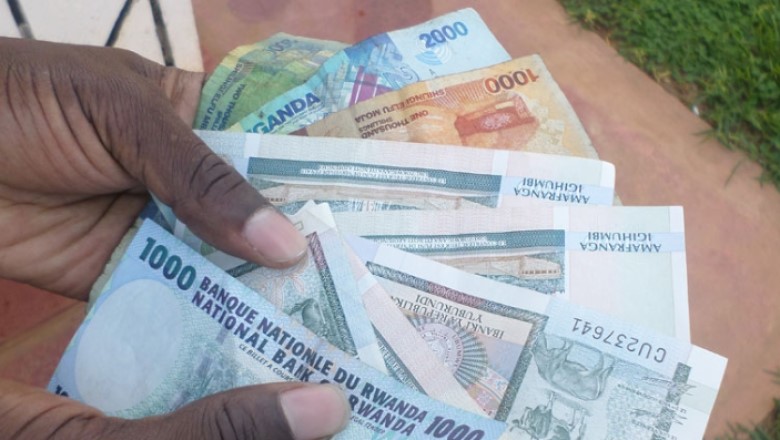
Alongside geopolitical tensions, Rwanda is experiencing a currency crisis. The Rwandan franc lost 8.8% of its value against the US dollar in the first half of 2023, according to data from the National Bank of Rwanda. This devaluation is largely due to a growing trade deficit and falling foreign currency reserves. The country, which relies heavily on imports, finds itself in a delicate situation, as a weaker currency makes imported goods more expensive, fuelling inflation.

The Rwandan authorities, who had hitherto maintained a rigorous and relatively stable monetary policy, now face increasingly complex economic challenges. The impact of this devaluation on bonds is particularly significant, as Rwanda has a high level of dollar-denominated foreign debt. Servicing this debt is becoming more expensive as the value of the local currency falls, creating increased pressure on public finances.

Economic consequences : inflation and loss of purchasing power

One of the immediate consequences of falling bonds and currency devaluation is rising inflation. Prices of consumer goods, especially food and fuel, tend to rise when the local currency loses value. This directly affects the population, with a drop in purchasing power, particularly in urban areas where access to imported goods is crucial.

For Rwandan households, this high inflation represents an additional difficulty. Citizens’ purchasing power is reduced, which can create social tensions and erode the middle class, a key sector for the country’s long-term economic development. The Rwandan authorities face the difficult task of controlling inflation without damaging economic growth. However, the Central Bank may have to raise interest rates, which in turn could slow investment and worsen the economic situation.

Impact on foreign investment and economic development

Rwanda has long been considered a model of economic growth in Africa, with a GDP growth rate often higher than the regional average. The country has attracted numerous foreign investors, notably in the infrastructure, tourism and agricultural sectors. However, this confidence is beginning to waver, due to geopolitical instability and domestic economic concerns.

The fall in Rwandan bonds could lead to a reduction in Foreign Direct Investment (FDI), a key driver of industrialization and economic development. Foreign investors, who play a crucial role in job creation and technology transfer, may be less inclined to invest in an uncertain environment. The private sector, which relies heavily on external investment to finance infrastructure projects and new businesses, is likely to suffer in these difficult times.

The fall in Rwandan bonds and the devaluation of the franc are warning signs for the country. According to some analysts, if Rwanda is to avoid a deep economic crisis, it will have to redouble its efforts to stabilize its economy, reassure investors and find diplomatic solutions to regional tensions. Rigorous management of public debt, courageous economic reforms and a sincere commitment to peace and stability in East Africa will be essential to guarantee the sustainability of Rwandan growth.



Find out more

CONTACT US NOW

Don't miss any opportunities

Receive all the latest opportunities directly in your inbox.

Please check your inbox or spam folder to confirm your subscription.

Share
Previous Article BEAC- BCEAO : strengthened cooperation for financial stability and innovation in Africa
Next Article Rwanda : MICE, an engine of growth with high investment potential Rwanda : MICE, an engine of growth with high investment potential
- Advertisement -
Popular this month
JUST ENERGY TRANSITION IN SENEGAL
Just energy transition in Senegal : less than 650 billion mobilized out of a 1,640 billion FCFA target
Senegal: Super gasoline now 990 FCFA, diesel 755 FCFA as new prices take effect today
Senegal: fuel prices increased again, after a drop last december
Onions in Senegal: import freeze officially lifted
Marcelle Monkam Siayojie, the Cameroonian at the Helm of Jumia Morocco
Who is Marcelle Monkam Siayojie: the Cameroonian executive who is Jumia Morocco’s new CEO
Rebar: VAT on Local Products Is Six Times Higher in Senegal Than in Gabon
Rebar: VAT on local products is six times higher in Senegal than in Gabon
Senegal Targets 487 Billion FCFA on UEMOA Securities Market in Q3 2026
Dakar aims to mobilize 487 Billion FCFA in two months on the UEMOA securities market
hejun tour

Recommended

Cameroon Port Crisis: GECAM Warns of Economic Fallout Amid Douala Port Disruptions
Companies

Scanning crisis at douala-bonaberi port : dual operators, container blockage and rising threat to Cameroon’s economy

GECAM raises the alarm over growing economic fallout. In a statement released on February 12, 2026, the Groupement des Entreprises…

4 Min Read
Tunisia launches a national investment platform, positioning itself as a competitive destination
Institutions

Tunisia launches a national investment platform, positioning itself as a competitive destination

The project is being implemented in partnership with Ernst & Young. An innovative project designed to transform the country's economic…

3 Min Read
Nigeria : Meta, head quarter of Facebook and WhatsApp, roll call US$220 million fine
Telecommunications & TIC

Nigeria : Meta, head quarter of Facebook and WhatsApp, roll call US$220 million fine

Nigeria has imposed a $220 million fine on US group Meta, head quarter of Facebook and WhatsApp, for "multiple and…

5 Min Read
Cameroon, Ivory Coast and Gabon : the economic and social ambitions for 2025
Analyses

Cameroon, Ivory Coast and Gabon : the economic and social ambitions for 2025

Cameroon: guaranteeing transparency to attract more private investment In his traditional address to the Nation on December 31, Cameroon's President…

15 Min Read
invest-time
Central Africa
  • Cameroon
  • Central African Republic
  • Gabon
  • Equatorial Guinea
  • Democratic Republic of Congo
  • Republic of Congo
  • Sao Tome-et-Principe
  • Chad
West Africa
  • Benin
  • Burkina Faso
  • Cape-Verde
  • Ivory Coast
  • Gambia
  • Ghana
  • Guinea
  • Guinea-Bissau
  • Liberia
  • Mali
  • Niger
  • Nigeria
  • Senegal
  • Sierra Leone
  • Togo
East Africa
  • Burundi
  • Djibouti
  • Eritrea
  • Ethiopia
  • Kenya
  • Ouganda
  • Rwanda
  • Somalia
  • Sudan
  • South Sudan
  • Tanzania
Southern Africa
  • South Africa
  • Angola
  • Botswana
  • Comoros
  • Eswatini
  • Lesotho
  • Madagascar
  • Malawi
  • Maurice
  • Mozambique
  • Namibia
  • Seychelles
  • Zambia
  • Zimbabwe
North Africa
  • Algeria
  • Egypt
  • Libya
  • Morocco
  • Mauritania
  • Middle East
  • Tunisia
Useful links
  • News
  • Contact us
  • Newsletter
  • Monitoring
  • Services
  • Commodities
Others web site of the Group
  • Afrik Shine TV
  • Album Social
  • Sports Team
  • AFrik Shine Medias Group
  • About us
  • Archives
  • Partnership
  • Club Invest For Africa
  • Privacy policy
  • Legal information
  • Cookie Policy
  • Privacy Statement

© 2023 Invest-Time. All rights reserved. By Afrik-Shine Medias Group.

logo invest time logo invest time
Welcome !

Log in

Username or Email Address
Password

Lost your password?

Not a member? Sign Up